
Launching and processing an industrial hemp cultivation project with EU-certified seed in Spain: everything you need to know.
Quick summary
Is it legal to grow industrial hemp in Spain? Yes, with certified seed of varieties listed in the EU Common Catalogue.
THC limit: since 2023 the CAP rules set a maximum of 0.3% THC (previously 0.2%).
Permitted uses: fibre, stalk and seed. Flower for extracting cannabinoids or for consumption is the most contentious area.
Everything you need to know.
What is industrial hemp?
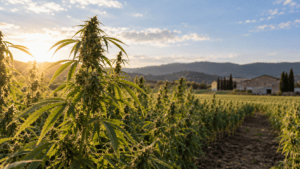
Starting an industrial hemp cultivation project with EU-certified seed is undoubtedly an interesting development option for rural areas today. Industrial hemp is a very versatile product and is increasingly accepted in different fields, such as construction and food. Industrial hemp cultivation is growing exponentially every year and is becoming widespread in some neighbouring countries. One of the most important things before developing an industrial hemp project is to understand clearly and accurately the legal status of this type of crop and, above all, the limits that cannot be crossed so that the project does not end up becoming a problem for its promoter. Proper advice beforehand will avoid many problems and headaches in the future.
Understanding the legality of industrial hemp
To understand these limits, you need to understand how the prohibition of cannabis, or hemp, works, since it is the same plant. The main difference between them is that hemp has almost residual levels of THC, the psychoactive component of cannabis, below 0.3%, the limit applied by the European Union since 2023 (previously 0.2%). In 1961 the Single Convention on Narcotic Drugs was signed, in which most countries in the world undertook to prohibit drugs and certain plants capable of producing psychoactive substances. In the case of cannabis, the Convention does not prohibit the whole plant, but certain parts of it, specifically those with the highest concentrations of cannabinoids, such as the flowering tops (buds) and the resinous leaves surrounding them, leaving the rest of the plant uncontrolled. For these international rules to apply in Spain, they had to be incorporated into Spanish law, which was done through the 1967 Narcotics Act. This law regulates licences for the cultivation, production, processing, extraction, import and export of substances, plants or parts of plants controlled under the international conventions.
Permitted uses of industrial hemp
In the case of the cannabis or hemp plant, this licensing system, managed by the Spanish Agency of Medicines and Medical Devices (AEMPS), excludes industrial uses, which do not require a licence. The reason is that industrial uses of cannabis or hemp (strictly speaking, the production of seed for cosmetics and food and the production of fibre) involve parts of the plant not controlled by the 1961 Single Convention: the stalks, roots and seeds. Authorisation of cannabis or hemp crops for industrial uses is therefore not processed through the AEMPS, but through an administrative procedure with the agriculture authorities. One of the main requirements for growing industrial hemp is to use EU-certified seeds. There are many varieties of EU-certified industrial hemp seed, all included in a list that is updated every year. Depending on the product we want to obtain, fibre or seed, or on the climate or irrigation available on our plot, land or farm, there are varieties more or less suited to each purpose. The main feature of these EU-certified industrial hemp seeds is that their THC concentration is limited to 0.3% (0.2% until 2023). The same does not apply to other cannabinoids in the plant, such as CBD or CBG, which have much higher concentrations than THC. The reason is that, when these varieties were developed, the aim was to eliminate or minimise THC, not to act against the other cannabinoids, which, unlike THC, are not specifically controlled at international level.

Industrial hemp flowers, cannabis light or legal non-psychoactive marijuana: is selling them legal?
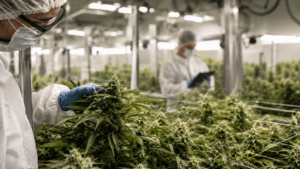
The flowers or buds of industrial hemp plants are the critical point of this type of project. There are different interpretations of whether it is legal to use crops grown from EU-certified industrial hemp seed to obtain hemp flowers for the booming market of legal non-psychoactive cannabis or cannabis light, and to extract uncontrolled cannabinoids such as cannabidiol (CBD) and cannabigerol (CBG) from these flowers for use in many products such as sublingual oils, cosmetic oils, food supplements, topical creams, beauty products, vape pens and food products. In Spain, the position of the Spanish Agency of Medicines and Medical Devices (AEMPS) is that it is not possible to produce industrial hemp flowers for the legal non-psychoactive marijuana or cannabis light market under an industrial hemp cultivation authorisation, since, as mentioned above, the only permitted uses are industrial ones. The AEMPS’s main argument is that cannabis or hemp flowers are specifically controlled under the international narcotics conventions, regardless of their THC level, even if it is below 0.3%. However, this interpretation is increasingly hard to sustain following a ruling by the Court of Justice of the European Union on the marketing and manufacture of cannabidiol (CBD) products. In this ruling, the Court of Justice of the European Union stated that, contrary to the AEMPS’s view, CBD cannot be considered internationally controlled. The agency took the view that, since all extracts of the plant are controlled under the international conventions, CBD, as a plant extract, must be controlled too, but in reality it is not. As the Court argues, if the legislator had intended to control or prohibit CBD or the other cannabinoids, it would have included them specifically in the control lists, as it did with THC. Therefore, if a CBD preparation has been produced in an EU country where extraction from certified industrial hemp plants from authorised crops is permitted, the marketing of these products cannot be restricted in any EU country under the Treaty on the Functioning of the European Union. This historic ruling overturns the AEMPS’s arguments, which have been shown to be wrong. That is why many companies and advisers consider that the AEMPS is also wrong on this issue and that the ruling extends to hemp flowers, not just CBD preparations. In reality, the ruling does not specifically mention hemp flowers, but CBD products or preparations extracted from industrial hemp plants; it is also reasonable that it does not mention flowers, since the case concerned the sale of vaporisers, not flowers. For all these reasons there is still great uncertainty on this point, even though it seems hard to understand and illogical that flowers could be subjected to an extraction process but not traded.
Main problems when launching and processing an industrial hemp crop
There are many problems associated with launching this type of crop, but we could mainly identify three:
Theft
One of the main problems of industrial hemp cultivation is the theft farmers suffer, which generally occurs when the plants are already developed, from mid-August onwards. Thieves know this product has high added value and that stealing it is treated like stealing any other agricultural product, so the penalties and sanctions they face are lower, which means they act without fear. In recent years there have also been many cases of assaults and some killings arising from attempts to steal these crops and farmers defending them. This problem is growing, so it is essential to manage the crop discreetly, preferably in a greenhouse or a structure that prevents it from being seen from outside, and to have both active and passive security measures from the time the plant is developed. In addition, there are more and more cases where thieves do not steal the hemp plants from the greenhouses but wait until all the work has been done and the product is drying before stealing it.
Legal problems
As mentioned above, obtaining hemp flower under an industrial hemp cultivation authorisation has a complicated legal fit, since the AEMPS considers that it is not authorised regardless of the cannabinoid levels of the flowers. On the basis of this criterion, which is followed by the Guardia Civil’s environmental unit (SEPRONA), there are more and more inspections of this type of crop and more administrative and criminal proceedings against their promoters. It is highly advisable to keep very strict control of the cannabinoid percentages in samples and to analyse them in several different laboratories to compare the results and be certain that you are working with a product that has no criminal relevance, since the fines and prison sentences if THC percentages are exceeded can be high, with a real risk of going to prison. The most important part of the whole project is undoubtedly choosing suitable industrial hemp seeds with references showing that THC levels will not exceed 0.3%, so that the greatest risk, the criminal one, is kept to a minimum.
Inexperience
Another significant problem is inexperience in growing hemp. This type of crop requires knowledge of the plant, its care and environmental control, during growth, flowering and subsequent drying. It is highly advisable to have the help of an expert agronomist who can give guidelines for starting this type of project with guarantees: from a prior analysis of the soil, a fertilisation plan and crop monitoring, to taking samples for analysis and preparing a report on the evolution of cannabinoid percentages in case of an inspection by SEPRONA or Ministry of Agriculture technicians.
Requirements for growing industrial hemp in Spain
- Certified seed: of a variety listed in the EU Common Catalogue of Varieties of Agricultural Plant Species. Keep the seed labels and purchase invoices.
- THC content: the variety must have a content of 0.3% or less. The authorities may take samples in the field to check this.
- Notification to the agriculture authorities: the crop must be declared to the agriculture department of your autonomous community and, if you apply for aid, in the single CAP application.
- Use of the harvest: fibre, stalk and seed are industrial uses. Extracting cannabinoids from the flower requires additional authorisations and is the area with the greatest legal risk.
- Security and documentation: it is advisable to have contracts for selling the harvest, a security plan against theft and legal advice from the start.
Frequently asked questions about industrial hemp
How much THC can industrial hemp contain?
In the European Union, hemp varieties authorised for cultivation must have a THC content of 0.3% or less, the limit applicable since 2023.
Do I need an AEMPS licence to grow industrial hemp?
Not for industrial uses such as fibre or seed, which are processed with the agriculture authorities. AEMPS authorisations are needed to grow cannabis for medical or scientific purposes.
Can industrial hemp flowers be sold?
It is the most contentious area. The sale of flowers for human consumption has led to fines and criminal cases in Spain, so each project should be analysed before selling them.
Do you have a hemp project? We help you with the formalities and contracts: lawyers for industrial hemp projects.
Do you need legal advice?
At S&F Abogados we specialise in cannabis law. Find out about our service for CBD and hemp businesses, send us an online enquiry or call us on +34 919 532 802.