
How are CBD and other cannabinoids used in cancer treatment?
There is a lot of talk about the use of CBD and other cannabinoids in cancer treatment, but there are still no clinical studies setting guidelines for using cannabinoids in anti-tumour treatments, and no country has included cannabinoids in its medical cancer treatments.
That said, there is solid preclinical evidence (studies in animal models) and observational evidence that provide a solid scientific basis for the anti-tumour activity of cannabinoids. Let’s look at what is known about how CBD and cannabinoids may slow the effects of cancer.
Effects and results of CBD cancer treatment in humans
The idea that CBD can fight cancer in humans is a conclusion drawn from the good results obtained in animal experiments, but not enough clinical studies have yet been carried out in people to put it into practice. In fact, there are very few clinical trials (fewer than ten) studying the role of CBD as an anti-tumour agent.
The most relevant of these trials was the clinical study carried out between 2014 and 2016 in 177 patients with glioblastoma (brain cancer) in Romania and the United Kingdom. In this case Sativex (a drug containing THC and CBD) and temozolomide were combined with other drugs. The doctors concluded that Sativex and THC on its own produced a significant improvement in patients’ pain. The conclusions therefore referred more to improving the quality of life of cancer patients by relieving their pain than to slowing tumour growth.
The Cancer Biology and Cannabinoid Research Laboratory at the Technion – Israel Institute of Technology, a centre that researches the medical applications of cannabinoids, also highlights the possibility that ” cannabinoids may have anti-tumour effects in different types of cancer such as glioma, breast or skin carcinoma, as has been shown in several studies carried out over the last decade”. However, they stress that these effects were investigated in vitro, not in people.
How to take CBD for cancer
There is no common pattern for taking CBD against cancer; instead it depends on the patient’s symptoms and constitution, and on the drugs that make up the patient’s treatment. The dosage and method of taking CBD is a decision for the doctor treating the patient, and will vary from case to case.
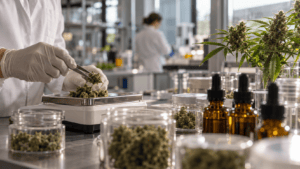
In any case, when cannabidiol is taken for medical purposes, extracts are usually used so that it can be dosed accurately, and the cannabis plant from whose flower CBD is extracted is not usually used in plant form. This ensures that the patient is taking only CBD and no other active ingredient present in the cannabis flower.
Anti-tumour potential of cannabinoids
Experts have stated that some active ingredients of cannabis, such as the cannabinoids THC and CBD, may have anti-tumour potential. See the conclusions of Guillermo Velasco, PhD in Biology from the Complutense University of Madrid, on how cannabinoids act against cancer.
Anti-tumour effects of CBD and THC in cancer patients
This scientist believes that different types of cancer respond to cannabinoids, specifically CBD. Several preclinical studies in animals have shown this: CBD and THC can control tumour growth. They can cause tumour cells to die, they can inhibit the blood supply to a tumour (depriving it of nutrients and oxygen and stopping it from growing), and they can reduce the ability of tumour cells to migrate to other tissue and cause metastasis.
Today they are not used as a stand-alone treatment in medicine, but as a complement to treatments that have already been shown to work. Because “it cannot be said today that cannabinoids are effective anti-tumour agents”, Velasco said during this talk organised by the Spanish Medical Cannabis Observatory.
Palliative effects of CBD and THC in cancer patients
There are more clinical studies on cannabinoids as palliative agents than as anti-tumour agents. As published by the US National Cancer Institute, it has been shown that CBD or THC may relieve the symptoms of people with cancer; above all, these cannabinoids have been considered components that counteract the negative effects of chemotherapy.
CBD and THC can counteract nausea, lack of appetite, difficulty sleeping and muscle pain, which are common in patients receiving chemotherapy to fight cancer. In addition, it was shown at the time that THC alone did not kill the tumour, although it did prolong the patient’s life. That is why scientists assumed that cannabinoids alone were not the ideal remedy, but that combining cannabinoids with other anti-tumour drugs would be the solution.
Do you need legal advice?
At S&F Abogados we specialise in cannabis law. Find out about our medical cannabis licence service, send us an online enquiry or call us on +34 919 532 802.